
Analisis Kemampuan Literasi Sains melalui Kegiatan Menanam Kangkung Siswa kelas IV di SDN Cipopokol Kecamatan Caringin
DOI:
https://doi.org/10.61291/supernova.v1i1.16Keywords:
Discussion methods, learning outcomes, scienceAbstract
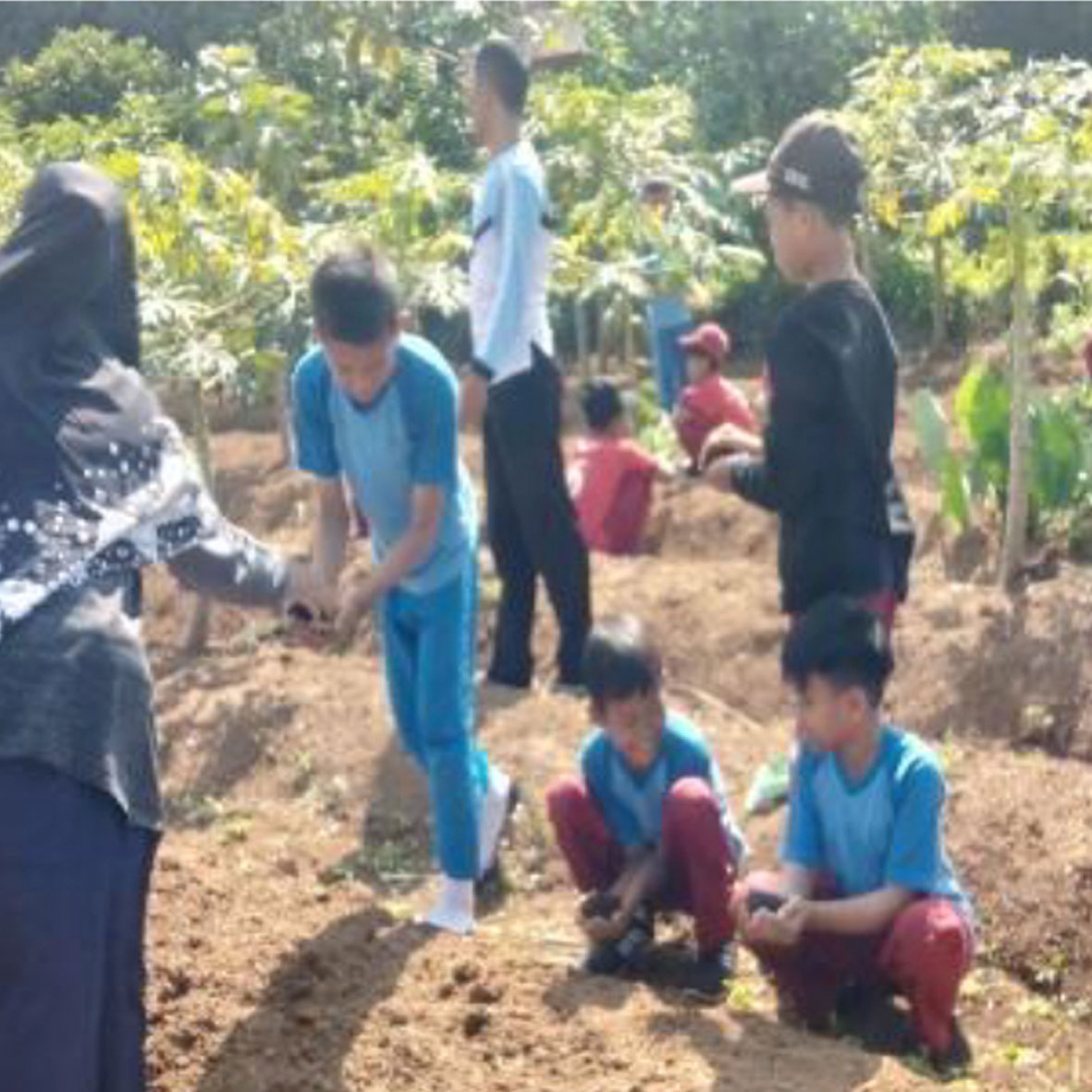
This research aims to analyze scientific literacy skills through water spinach planting activities for class IV students at SDN Cipopokol, Caringin District. Scientific literacy is an important aspect of education to develop students' understanding of scientific concepts from an early age. Kangkung was chosen as the object because it is simple and relevant to the surrounding environment. The method used in this study was a quasi-experimental design with a single control group pretest-posttest. Grade IV students were divided into two groups: the control group and the experimental group. The experimental group carried out activities to plant water spinach, while the control group did not carry out similar activities. Before and after the activity, students from both groups took a scientific literacy test adapted to the material on growing kale. The research results showed a significant increase in scientific literacy skills in the experimental group after participating in the water spinach planting activity. Their average scientific literacy score increased significantly compared to the previous score. On the other hand, the control group did not experience a significant increase in scientific literacy skills. In conclusion, the activity of planting kale can effectively improve the scientific literacy skills of grade IV students at SDN Cipopokol. Practical steps such as direct observation of plant growth and discussion of factors that influence plant growth can help students understand scientific concepts better. It is hoped that a similar approach can be adopted in learning in other schools to improve students' scientific literacy as a whole.
Downloads
References
Azizah, R. O. N. (2019). Kajian Metode Eksperimen Terhadap Sikap Ilmiah Siswa pada Pembelajaran IPA. Prosiding Seminar Nasional Pendidikan Guru Sekolah Dasar, 262–266.
Kemdikbud. (2017). Materi Pendukung Literasi Sains. Gerakan Literasi
Kemdikbud. (2014). literasi budaya dan kewargaan. Paper Knowledge . Toward a Media History of Documents.
Kemdikbud. (2017). Materi Pendukung Literasi Sains. Gerakan Literasi Nasional, 1–36.
Nasrullah, R., Aditya, W., Satya, T. I., Nento, M. N., Hanifah, N., Miftahussururi, & Akbari, Q. S. (2017). Materi Pendukung Literasi Digital. Kementerian Pendidikan Dan Kebudayaan, 43. http://gln.kemdikbud.go.id/glnsite/wp-content/uploads/2017/10/literasi-DIGITAL.pdf
Rachman, T. (2018). Metode Penelitian. Metodologi Penelitian. http://repository.upi.edu/36708/6/T_SN_1604860_Chapter3.pdf
Wulandari, A., Yektyastuti, R., dan Effane, A. (2023). Pengaruh Model Pembelajaran Project-Based Learning Berbasis STEM Design Thinking Terhadap Keterampilan Berpikir Kritis Siswa Sekolah Dasar. Prosiding National Conference of Islamic Natural Science Vol.3. Kudul: Fakultas Tarbiyah IAIN Kudus.
Yektyastuti, R., Mawardini, A., & Hartono, R. (2019). Preparing the Next Generation Science Teacher: A Case in Applied Science Course. Journal of Physics: Conf. Series 1233 (2019) 012104.
Zetriuslita, Z. (2016). Profil Sikap Ilmiah Rasa Ingin Tahu (Curiosity) Matematis Mahasiswa. Jurnal Ilmu Pendidikan (JIP) STKIP Kusuma Negara Jakarta, 8(1), 41–46.
Downloads
Published
How to Cite
Issue
Section
License

This work is licensed under a Creative Commons Attribution-NonCommercial-ShareAlike 4.0 International License.


